Khajuraho, a UNESCO world heritage site, is a small town in Madhya Pradesh and approximately 620 km from Delhi. Khajuraho is a famous tourist and archaeological site known for its sculptured temples dedicated to Shiva, Vishnu, and Jain patriarchs. The following map details the road way from Satna to Khajuraho.
Satna - Khajuraho
We started from Satna at 8.30 a.m. and reached Khajuraho at around 10 a.m. Our onward fight to Delhi was scheduled for 12.30 p.m. On reaching the outskirts of the city, the driver informed us that the temples were only 10 mins drive from the airport. As we had sufficient time at our disposal we decided to visit the temples.
Unlike other Indian tourist spots, the temple area is extremely clean and well maintained. A major reason for it is that the number of tourists is not very high. In fact, during our visit the foreigners had outnumbered the domestic tourists. A major reason for less number of domestic tourists is that the town is much different from any other temple city of India. It is not about religion and worshipping and deities. The temples of Khajuraho are instead famous for the sensual and erotic art etched on its walls in the form of sculptures.
During the Chandela dynasty, Khajuraho contained about 85 temples built by multiple rulers from about 950 to 1050. Of the 85 original temples, most constructed of hard river sandstone, about 20 are still reasonably well preserved. During my short stay, I visited almost all temples and captured them in my camera.
About Khajuraho
Temple sight from entrance
Are there any tourists ?
Wild Boar. Incarnation of Lord Vishnu.
Notice the carvings on the body
Check out the temple roof
Millions of idols
Zoom on one of the idols
Big Bull Nandi. Wall Street ?
More Idols
Even more. Amazing India.
1 of the 22 temples
The above are some of the photographs I had taken. I hope by now some of you might have decided to visit Khajuraho. Trust me, if you stay in India and have some sense of maturity; its a place worth visiting at least once in your life time.
In December 2009, my geography was tested, when my boss asked me to visit a client in Satna. Satna is a town located in the state of Madhya Pradesh. It is approximately 772 km from Delhi (rail distance). Satna is renowned for its Dolomite and Limestone mines. Hence, its main economy is cement manufacturing. The district is home to a number of cement factories namely Birla, Prism and Bhilai Jaypee. Satna is also home to one of the leading cables manufacturer of India, Universal Cables Limited.
Delhi-Satna Route
During the trip I was accompanied by 2 other bankers and a company executive. We left for Satna on Friday evening by Mahakoshal Express (Delhi-Jabalpur). The train departs from Delhi at 1610 hrs and reaches Satna next morning at 0630 hrs. Our journey didn’t begin on a good note as the train was delayed by almost 4.30 hrs.
During the journey, the train was delayed further and we reached Satna by around 12 the next day (delay of almost 6 hrs). Due to the unforeseen delay our onward travel schedule was hampered. To reach Delhi as per schedule we decide to cancel our return train tickets and return by air via Khajuraho.
On reaching the station, we left immediately for the plant, situated approximately 30 kms from the town. Satna as any other Tier 2 town has a pathetic infrastructure. As our schedule was very tight (made even more thanks to Indian Railways) we didn’t get much time to explore the city. But to be frank, seeing the condition of the town I didn’t feel like exploring it.
A Busy Market Road
The only place worth visiting is Maihar, a small city approximately 40 km from Satna. Maihar is famous for a temple of goddess Sharda, built in 9th or 10th century AD. The temple is situated on a hillock and is known for its 1063 steps. The temple is also connected via a ropeway. We visited the temple on Saturday evening.
Maihar Temple on Hill Top
Temple Entrance on Hill Top
Maa Sharda Deity
The temple is associated with 3 legends (as told by the localites):
Distressed on the death of his wife "Sati", Lord Shiva was furious, and was wandering with her dead body. Fearing that the earth might get destroyed Lord Vishnu decimated Sati in 52 pieces. Her necklace fell at this location and hence the name "Mai" (mother) "har" (necklace).
Two warriors "Alha" and "Udal" were ardent followers of Sharda Devi. They are believed to be the first to visit the temple. They used to practice at the akhara located at the base of the temple. Alha penaced for 12 years before getting blessings from the goddess. Alha used to call the goddess as Maa Sharda and henceforth the temple was called by the same name.
Adiguru Shankaracharya worshipped here.
View from Hill Top
"Alha" Pond and Akhara
Sunday morning we left for Khajuraho via road. The distance from Satna is about 60 kms and takes slightly more than an hour. On way, the driver briefed us about the various temples of Khajuraho and their origin (he reminded me of my history teacher). Since school days, I had heard that the Khajuraho temples are the best in the world. On reaching the place I realized I was wrong, the magnificent temples are not only the best but “out of this world!”
It’s been quite a time since I last blogged. The delay can be attributed to two reasons. Firstly, I shifted my location to the political capital of our country. As evident, I imbibed partial legacy of our politicians comprising of laziness and procrastination (as evident from CWG preparation). Secondly, I resumed my passion for travelling and leisure driving.
My first Blog under the section on travelling is on Kodaikanal, a hill station located in Southern India. Popularly known as “Kodai”, the hill station is situated at an altitude of about 2,133 meters on Palani hills. It is situated at a distance of approx 530 km from Chennai. The following route map will give an idea as to where the hill station is located.
A-Chennai; B-Kodaikanal
Kodai is unarguably the most serene hill station of Southern India. Due to its relatively large distance from major metros (Chennai and Bangalore), tourist inflow during off season is exceptionally less. This ensures that the region stays relatively clean and retains its natural beauty. Another important outcome is that it is not as commercialized as other popular hill stations.
In January, 2010 I visited Kodaikanal for the fifth time. Four of those trips have been self-driven on rotational basis with my dad and elder brother. The last one was entirely driven by me. We started from Chennai (Adyar) at around 5.00 a.m. and reached Dindigul by around 12.30 p.m. with few small stoppages, that’s about 440 km in 450 m. Post Dindigul, we stopped at a number of places for taking snaps. Average time for the entire trip with nominal stoppages is around 9.30 hrs. The high average speed (by Indian standards) is majorly possible, as NH45 which starts from Guindy and ends in Theni is an absolute beauty. The only major blockage is near Trichy where road widening is under construction (about 1 hour for covering 20 km).
Our car which has made 3 trips to Kodai
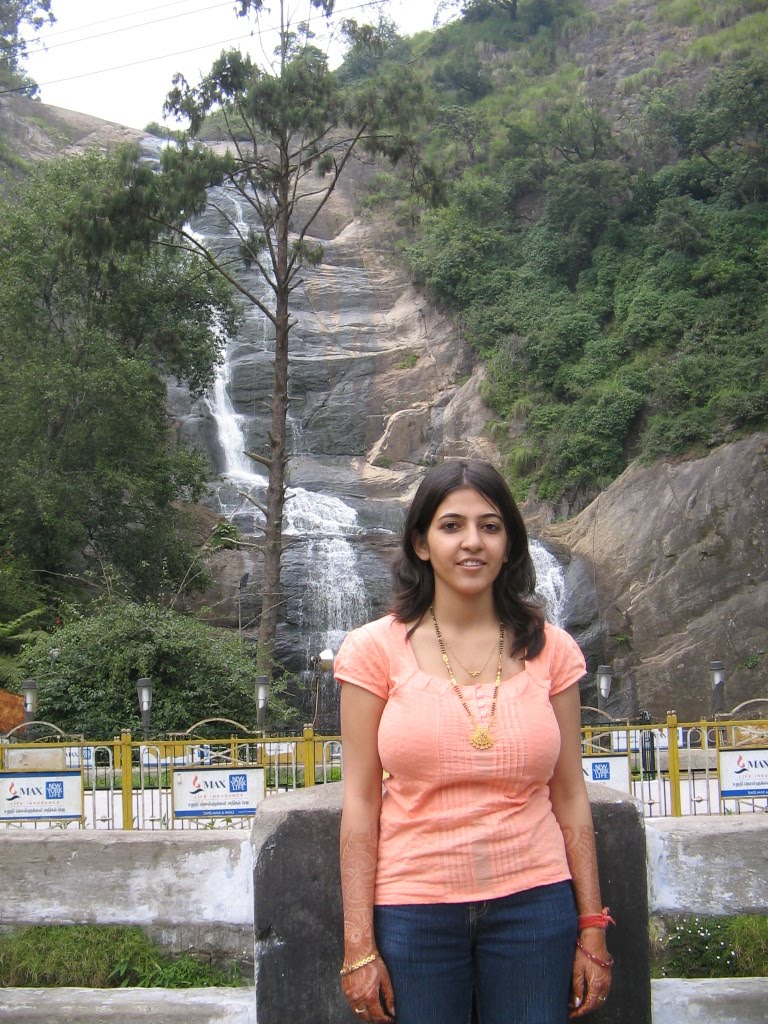
The diversion from Dindigul leads to Batlagundu, post which hilly area begins. The entire state highway is well laid and one rarely encounters traffic. The road to Kodai has multiple scenic spots where one can stop and enjoy natural beauty. One famous spot on way is the Silver Cascade (Water Falls). The water fall is generally crowded with lots of locals and tourist’s esp. scantily dressed men, seeing whom one gets an impression that they have never taken a bath in their entire life. During summer, the falls is nothing more than a Delhi water tap.
Siver Cascade Waterfalls in the background
Accommodation like any other hill station is not a problem. A number of budget hotels are present near the Kodai Lake. In all our previous 4 visits we stayed at MRF guest house, which according to me is no less than a 5 star resort.
Entrance to the Guest House, Cottage 1 visible in background
Cottage 2
Other nearby places of interest are Kodaikanal Lake, Bryant Park (adjacent to Lake), Coakers Walk, Green Valley View (Suicide Point), Pillar Rocks and Kurinji Temple. The temple is famous for the Kurinji flower which blossoms once every 12 years.The best of the lot undoubtedly is the Kodai Lake. The Lake is star shaped and roughly covers an area of 60 acres. The periphery of the lake is approx 5 km. Unlike other hill stations the lake is clean and not very crowded. The walk way around the lake is well built and ideal for cycling and walking.
Aerial view of Kodai Lake
Walkway around Kodai Lake
Pillar Rocks
On route to Chennai there is a deviation for a place called Palani. It is around 80 kms from Kodai. Palani is famous for Murugan Temple and sees more than 7 million devotees each year. There is rope way which leads to the top of the hill on which the temple is situated.
Ropeway to Palani Temple
Candidly speaking Kodai has nothing special to offer in terms of scenic beauty. The reason why I rate it highly is due to its serene ambience. Serenity in a tourist place in India is a luxury which one can only dream. Currently, Kodai is the only hill station in South India which has the right combination of scenic beauty and peacefulness. It is the perfect place for a traveler who wants a break from his monotonous city life.
When I bought my first cell phone, I hardly imagined that it would also go onto replace my camera, alarm clock and walkman. A solitary product offering from Nokia eliminated the need to purchase other renowned brands such as Casio, Canon and Sony. Any new innovation presents immense opportunities for innovators and threats for laggards.
Social media allows each and every organization to define its brand; it opens up an immense landscape of opportunities for businesses. Primary among them is the capability to act as a platform for promotional or marketing innovations such as encouraging the employees and customers of the organization to host company logo on their twitter, orkut, facebook accounts and even blogs. This creates immense brand penetration. Not only can organizations use social media to build brand, they can also use it to interact with customers and show them that they care, which, in turn, breeds loyalty. Social media can also boost an organizations reputation and help in building relationships. On the internet potential for reeling in new leads is unlimited.
It is highly unlikely to spot a trader in Mumbai reading the Wall Street Journal or a trader inNew Yorkreading the Economic Times. However, it is very likely to find them viewing one another’s profiles on LinkedIn and commenting on each other’s blogs. The internet, which forms the backbone of the social media, redefines the globe by erasing boundaries. A comprehensive company profile on LinkedIn complemented by employee profiles across management levels constitutes a sales booklet in itself for prospective customers across the globe.
Using social media an organization can reach customers that traditional marketing misses. The organization can learn how to improve its products and services. By encouraging open communication through public comments, the organization can learn how to make its products, services and pitch more palatable.
An important aspect of social media is that it is cost-efficient in comparison with other marketing methods, even if the organization has to hire a dedicated team or outsource its social media content needs.
The primary threat of social media is best demonstrated by recent tweets of Mr. Lalit Modi and Mr. Shashi Tharoor. The communicator often underestimates the magnitude and diversity of the recipient audience leading to unexpected reactions. Organizations face similar threat where an advertising site or employee’s opinion on a business or controversial subject may be implicitly interpreted as the company’s position on it, leading to negative publicity. This necessitates caution while choosing brand promoters and preferably defining rules, regulations or guidelines for expressing opinions.
Social media places high demands on talent and time. It can be difficult to constantly come up with innovative exciting content that interests a variety of readers. Content must be created, edited and published; comments must be responded to and sites and pages must be maintained. The efforts are not likely to earn immense popularity overnight and hence have a high gestation period.
Unfortunately, there are no globally accepted guidelines or empowered regulators. This caveat has resulted in individual companies coming up with their own guidelines whose monitoring and enforcement may require setting up of a social media department, as already done by Intel. This option, though redundant and an overhead is the solitary and hence mandatory requisite for companies looking to tap the social media wave.
Most of the teenagers would buy a Vaio only for its looks. Moreover, the premium laptop these days is being promoted by Bollywood’s size zero diva Kareena Kapoor. I wonder whether she has time for using one. I certainly have. My horrid one year experience with one of them has forced me to come out from my 2 month slumber and blog.
August 2008 I decided to shell out a few extra bucks and buy a Vaio. Similar configuration was available in other brands such as Dell, HP etc for a much lesser price. But then, I was totally blinded by the looks and purchased VGN CR-353 for 53k. Mind you the superfluous purchase was before recession had started.
After about 8 months in March 2009, I started facing a peculiar problem. After working fine for a certain time, the laptop suddenly started to shut down randomly, without any connection to what I did. Initially, I overlooked the problem, as the frequency of the same was once a week. How could there be anything wrong with a Vaio.
In May 2009, the frequency increased and I decided to go to a Sony authorized service station. The concerned person told me that the problem is temporary. Solution is to use the laptop on battery for few days as the system gets over heated on direct supply. I trusted him on my life. How could a Sony service station engineer say anything wrong?
Well, I was in for a big surprise.
June 2009 I left for Mumbai and left the prized possession with my Dad. In my absence the problem kept on increasing and another visit to the service station resulted in the same reply. In August 2009, the guarantee expired and so did my laptop. Currently the system shuts down every time I use CPU intensive applications (Movies, Games or running time of more than 30min on direct supply).
The symptoms of overheating are:
·It works fine as long as you don't run any CPU intensive applications. But when you stress it, it works for a while (10-15 minutes) and shuts down.
·Once it does shut down, it will shut down sooner if you restart it without giving it time to cool off. Then the cycle starts again.
My Vaio is currently an ultra modern elegant looking typewriter. The only application that I can run on it is Microsoft Office. The good news is that I can run the advanced Office 2007.
Using the laptop is a very complicated procedure. It works on direct supply for some time. To avoid over heating it is switched to battery mode. When the battery is about to discharge it is again connected to direct supply. This switching of power supply increases the runtime to few hours. But one has to be very precise on time. This skill gets developed with time.
For those who are still not convinced, try this. Type “vaio premature shutdown” in Google search. You will get an astonishing 356,000 results. I wish I had done this before buying one.
My only suggestion for the prospective laptop buyers is - do not fall for the looks (Vaio or Kareena).
Training Room (spot me standing in the background)
“All things (good or bad) must come to an end” is a “remix” of an old English proverb. May 2009 witnessed the end of my teaching career. By mid May I knew that my 3 month stint would come to a stereotypic end, a sentimental farewell speech and exchange of mail ids (never to be used J). Instead, there was something challenging in store.
Few days before my retirement, the centre head informed me that Larsen & Toubro has approached him to arrange, 2 day training on Executive MBA (offered by IIM A). He wanted me to conduct the same. Both of us met the L&T officials and negotiated on the terms and conditions. During the meeting, we were informed that the training was for 17 senior managers with an average work experience of 8+ years. The managers would fly across India to attend the training.
The training comprised of the following modules
Quantitative
Logical Reasoning & Data Interpretation
Verbal
Emotional Quotient/Personal Interview
Each module was of 4 hrs duration. I was responsible for 1st, 2nd and 4th modules. Handouts were prepared for all participants. A 2 hour simulation test was also prepared, to simulate the actual exam. Quantitative and Verbal modules were to be covered on Day 1 while the remaining on the following day.
Different View of Training Room
All the 17 managers were friendly and made me feel comfortable. I was surprised by their exuberance to understand new concepts. In fact, some of them had better concept clarity than regular CAT students. The training was effective as 10 of the 17 managers cleared the exam and interview combined.
The entire experience of conducting a corporate training gave me utmost satisfaction. My almost 3 month experience was a roller coaster ride. I got an opportunity to teach, conduct seminars and undertake corporate training. Although, I am retiring, but I will be following the profession with interest and I shall indeed be back.
Years back an amnesiac assassin Jason Bourne kept the audience on the edge of their seats, when he discovered his true identity amidst a clandestine conspiracy. Yes, I am talking about Matt Damon in a 2002 super hit spy film named “The Bourne Identity”.Seven years hence, its Nandan Nilkanai who is all set to give more than 1.2 billion Indians their identity.
For a huge country like India, providing biometric unique ID cards is a mammoth task. Hence, it was no surprise that ex-Infosys co-chairman was appointed as the chairperson. This decision also came as welcome change as most of the key national projects were kept in political and bureaucratic hands.
The project was due for a long time as the issues related to multiple identity markers had increased significantly. Government over the years has invested significantly in issuing cards such as ration card, voter id, passport, pan card, BPL etc. This has led to operational inefficiencies.
The national ID card would be the mother of all e-governance projects. In this post, I intend to educate the reader on the benefits. Whether the ambitious 2011 deadline would be met or not is another issue.
If executed, the card has umpteen gains:
Most important is the security benefit. The problem of illegal migration can be better tackled.
Poverty alleviation programs such as job guarantee or food security will gain, as the actual beneficiaries can be identified.
In case of medical emergencies, vital information regarding the patient’s blood group etc stored in the card can be used to save his or her life.
During election, the card would eliminate the possibilities of fake votes.
Government can save money by plugging leakages and targeting subsidies efficiently.
A single card would replace all other identity proofs (birth certificate, pan, ration card etc) hence making life easier.
The above are few of the benefits which have been made public at the initial stages of the project. It is up to the government, to ensure that previous errors are not repeated, and the entire execution is transparent. The stakes are very high, as we are not talking about a mere smart card but about a person’s citizenship, his “Born Identity”.
Federer has not yet received the honorary knighthood, but according to me he surely does deserve one. Last month in a marathon fifth set, Federer won his sixth Wimbledon and in the process eclipsed Pete Sampras record of 14 grand slam titles.
After losing to Nadal during last year’s Wimbledon finals, there were wide speculations that Federer’s dominance in professional tennis was coming to an end. Federer silenced his critics by winning his first ever French Open, and became only the sixth person ever to get a career grand slam. Some killjoys will undermine Federer’s last two grand slam victories, as he did not defeat Nadal. This eventually leads us to the ever green question “Is he the greatest ever”.
A glance at his immaculate career will answer the above question. Roger Federer is the only player ever to have
237 consecutive weeks as Rank 1
Won 15 singles grand slams (In 6 years)
Played 20 grand slam finals
Played 10 consecutive grand slam finals
Played 21 consecutive grand slam semi finals
4 consecutive years winning at least 2 grand slams
5 years winning at least 2 grand slams
3 years winning at least 2 grand slams
36 consecutive grand slam sets won
Won 7 initial grand slam finals
The above are just a few of his numerous records. Just for information he has lost all his 5 grand slam finals to Nadal. For those who still are not convinced have a look at this table.
Grand Slam
2003
2004
2005
2006
2007
2008
2009
Australian Open
4R
Won
SF
Won
Won
SF
F
French Open
1R
3R
SF
F
F
F
Won
Wimbledon
Won
Won
Won
Won
Won
F
Won
US Open
4R
Won
Won
Won
Won
Won
—
Some people would suggest that the sport has evolved so much that it is irrelevant to compare players of different eras. I certainly do agree, but apart from Federer no player has ever dominated the game to this extent. The debate on greatest ever might seem endless, but everyone would agree that he is certainly the greatest player of this era.